
The problem was caused by a switching failure in RIM's servers, causing a backlog of data. They said services would be restored by Tuesday. However, they have since said they aren't sure when it will be back. The outage originated in Europe, Africa, and Asia and has since spread to North America.
This is the latest round of troubles for Canada's largest smartphone maker. The company is trying to get a leg up on major competitors such as Samsung and Apple. Market share of Blackberry phones has been on steady decline since the iPhone launched in 2007. The Playbook tablet, their supposed iPad killer, was met with a cold reception earlier this year.
 | ||
| I've been texting my Blackberry friends all day and nothing. Is my iPhone down? |
Source: Reuters via Dailytech

According to the Zune website, Microsoft announced that "Windows Phone will be the focus of our mobile music and video strategy, and that we will no longer be producing Zune players."
The Zune has had a bumpy history. It was created as Microsoft's answer to the iPod and iTunes. It even looked and functioned similar to Apple's venerable player.
The device was launched in 2006 to mixed reaction. While certainly as good as the iPod, it had its problems. Namely a poorly implemented copy-protection system. It was unable to play certain files using PlaysForSure, Microsoft's own DRM scheme. The original Zune was also plagued with a clock bug, which corrupted the system software at January 1st, 2009 at 12am GMT.
Despite it's initial shortcomings, the Zune eventually grabbed ten percent of the US marketshare for all MP3 players. Given the sea of choices at the time, and the dominance of the iPod, it seemed Microsoft was onto something. The original Zune 30 gave way to larger capacity models, a "nano" version, and finally the Zune HD. The latter was an attempt to capitalize on the success of the iPod Touch. With it's nVidia Tegra Processor, unique touch interface, and OLED screen, it was arguably the best Zune. Many of the Zune HD's software features would be implemented in Windows Phone 7.
 |
| Zune 4/8/16 and it's nano sized cousin |
Despite great hardware and good software to back it up, the Zune continued to trail in the market. By 2008, sales were dipping. GameStop decided to stop selling the player at their stores due to lack of interest. However, 2008 happened to mark the Zune's international launch. The Zune was made available in Canada. This was the first time it had been sold outside the US.
Perhaps that was the Zune's downfall. It never attracted the same international audience that the iPod did. Microsoft went as far to actively discourage international customers from accessing certain online features. The Zune also failed to clearly differentiate itself from Apple. It was too similar to the iPod, and sold at the same price-point, but lacked the same global support.
As smartphones began to replace dedicated devices, the Zune's days became numbered. It was a fantastic player, hampered by poor marketing.
Update: Just after publishing this, I spotted a new article that says the Zune hasn't died after all. I guess neither Apple nor Microsoft knows what to do with their MP3 players. You can still buy the Zune HD for a cool $160.
Title image courtesy of Blogging With Ike

"The Android MegaPad is then the next logical step - a modern touch-based computing device with with a screen size that will enable a whole different set of experiences. Unlike tablets, devices like this will make simultaneous use by two users a practicality and will let users more fully immerse themselves in apps and games. In the demo video below, you can see two apps that, while written for phones and tablets, nevertheless demonstrate the usefulness of such a device."
Calling it a tablet is a bit deceiving though. The device is not yet portable. Mr. Drashkov claims he built the device for $600, using off-the-shelf parts. That's as much as the "puny" 32gb iPad.
The MegaPad runs a modified version of Android Gingerbread, which was used due to its adaptability. A video shows it running Google Earth and Fruit Ninja quite well. Martin is a fellow member of the Anandtech Forums, so I'm trying to pry some specs out of him. In the mean time, please bathe in the awesomeness that is the MegaPad.
UPDATE: Martin says he used a Pandaboard for this build. The company bills it as a low cost development platform for mobile software. The processor is a 1ghz Texas Intruments OMAP4430 running at 1ghz. It's based on the ARM Cortex A9, similar to the CPU used in the iPad 2. Graphics are fuelled by a PowerVR SGX540, also similar to the iPad 2's. It also features 1gb of DDR2 RAM, 802.11n Wi-Fi, Bluetooth, and can handle encoding and decoding of 1080p video.
There's no word on which screen he used, though I'm guessing it's an Acer T231H, as it's the only full HD touch screen monitor Acer currently sells.
Image copyright Marvel Productions/20th Century FOX
 Got an iPhone, but want to run apps on it that aren't approved by Apple. A Library of Congress ruling in the US will now allow you to do it legally, thanks to a DMCA exception.
According to Engadget, the government body summed up the ruling saying "computer programs that enable wireless telephone handsets to execute software applications, where circumvention is accomplished for the sole purpose of enabling interoperability of such applications, when they have been lawfully obtained, with computer programs on the telephone handset."
So what does this mean for the average user. Basically, Apple and other phone companies can't sue you for jailbraking your phone. They can't stop you from putting unapproved apps on it either, at least through legal channels. However, they can still use DRM to try and prevent you from doing it. They can also sue if you distribute their code in an unapproved way. Apple et al also aren't required to open their platforms for you.
Regardless, it's a small step in making embedded tablets and smart phones more open.
Image courtesy of Evaystyle.com

We never thought it would happen. They must have gone nuts at Cupertino. Apple has released a rival browser for the iPhone. The company is notorious for banning apps that "duplicate" the function of their own. So why did Opera Mini get through? It's an easy question to answer. Opera Mini for iPhone just isn't vary good.
The browser does have a few nice features. Opera has included an entirely new and intuitive user interface. It's vary similar to desktop Safari's "Top Sites" feature, which lays out your most visited favourites on a grid as soon as you open it. Each site has a little icon so you can quickly see which one it is.
Tabbed browsing is also better than mobile Safari. Press the icon at the bottom and you can see each tab you have open along with what pages they are, rather than having to flip between them.
Opera has other features that Safari doesn't have, such as searching for keywords in a web page, and saving web pages to memory so they don't need to be reloaded each time. It can also save a static image of a page to storage for quick referral.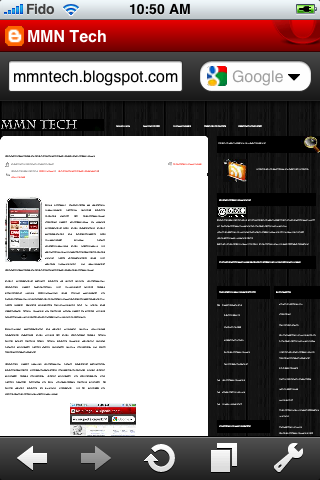 The big difference with Opera is speed. Their servers will compress web pages for you to make them load faster on mobile devices. I tested their claims using the slower EDGE network. MMNTech takes about 59 seconds on Safari. On Opera Mini, it only takes 17 seconds. Big difference. Not all sites are that dramatic but it definitely helps when you're using EDGE to save battery life. On 3G or when using Wifi, the speed up doesn't matter as much. Opera claims this compression can also save on bandwidth, but I didn't test that claim.
Despite all these advantages, Opera Mini is crippled by some major flaws. While Safari can display most web pages flawlessly, Opera struggles. Some pages have formatting problems. Stuff gets moved around or doesn't display properly. When loading Anandtech for example, the entire top navigation bar goes missing, making it impossible to get around the site.
Zooming is also atrocious and imprecise. It won't wrap text on double tap like Safari does. The zoom feature is clunky and a bit too fast for my liking. Opera also seems to have this problem where it will go back or reload the page by itself. I'll type out a forum post, hit done, then it reloads the page and wipes my post out.
Lastly, it lacks auto-correct. Using the iPhone's tiny keyboard is hard enough. You don't realize how much auto-correct helps when you make type-o's. You know, for those of us who don't have child's fingers. So you'll often find yourself going back to fix words that got misspelled.
The biggest problem with Opera is it's just unusable as an everyday browser. I think there's a lot of potential here. It could be a Safari beater with a little time and some patches. But right now, it has too many problems. They need to get working on fixing these issues pronto.
Score: 6 out of 10
What Works:
-Faster than Safari on EDGE
-Innovative user interface
-Adds some features like page saving and in-page text search
What Doesn't Work
-Poor zooming
-Doesn't display some pages correctly that Safari has no problems with
-No auto-correct for spelling
-Does weird things like re-loading pages by itself
 Like it or not, the iPad is the next big thing. Steve Jobs is calling it a revolutionary device. Portable computing is certainly changing. The netbook trend is giving way to sleek, all-in-one tablets. So if you're thinking of small system, you should definitely consider one. But what if you don't like the iPad? Here's four alternatives worth taking a look at.
JooJoo
Designed by Fusion Garage, the Joo Joo is billed as "the ultimate internet experience". It's a tablet specifically designed for web surfing. It allows users to browse the web and use a variety of web based apps. It can also play back full HD video and has a 720p screen resolution on a 12.1'' display. Perhaps the biggest one up on the iPad is support for Adobe's popular Flash media, which sites like YouTube use for video playback.
Unfortunately, the Joo Joo has a long list of problems, even before it launched. It was faced with numerous delays, and fewer than 80 pre-orders. That's compared to the 300,000 sales the iPad made on its first day. The device is also extremely limited in functionality. All it can do is surf the web. It has a 5 hour battery life to boot, which is half the iPad's. That's pathetic for what it does. The final nail is the price. At $499, it's the same price as the iPad with only a fraction of the functionality.
Engadget says the device was released with "terrible timing", saying it's unintuitive and delivers half baked software. This is one tablet you should probably skip.
HP Slate
It's not even out yet but this device is already causing quite a stir. HP has taken the netbook and compressed it down into a thin tablet roughly the same size as Apple's. Under the hood, it packs an Intel Atom processor, 1gb of RAM, 32gb of storage, a memory card slot, webcam, and a fully functional version of Windows 7 with HP's own touch support. A special graphics chip has also been added to enable full 1080p video through it's built in HDMI port.
This is probably one of the more powerful and flexible tablets out there. It can run any program that a typical netbook can run. This includes Adobe Flash. The downside is lack of platform specific apps that the iPad is known for. This includes games. On the plus side, it should be able to run many indie and older PC games. So it's not as if there's a shortage of software. The Slate will have a 5 hour battery life, which isn't great but isn't bad all things considered.
The Slate will retail for $549 for the 32gb model and $599 for the 64gb model. A 3G model is also planned. There's no word on a release date. Sometime in 2010 is all we've been told. This is definitely something to keep your eyes on.
Microsoft Courier
It may not even exist but it's still generating a lot of buzz. Microsoft calls the Courier a "digital journal." Mockups have shown a tablet with two screens that looks like a big Nintendo DS. Concept videos show it being used to take notes, plan schedules, edit photos, and create presentations.
The Courier could be the creative professional's dream. A practical device for content creation; instead of just watching what other people have done. Not much is known about the device at this time. It will input with a touch screen and stylus pen. It also runs a version of Windows Phone 7 on an nVidia Tegra 2 CPU. The same combo that run the Zune HD.
Some say the Courier will arrive in mid-2010. No word on price.
Archos 9
Archos jumped on the netbook bandwagon fairly quickly. The high end MP3 player manufacturer now makes a wide variety of portable computers. The Archos 9 is one of them. It's similar to the Slate, except it's bulkier and has a slower processor. It has a 1.1ghz Atom processor and runs Windows 7 Starter Edition. The Register ran several benchmarks on the Archos 9 and found it to be less than half the speed of comparable 1.6ghz Atom systems. A slow enough processor as is. Multi-tasking is almost impossible on a system this slow.
On the plus side, the Archos 9 is a fully functional Windows tablet, like the Slate. It also features a beefy 60gb hard drive and a HD webcam. It also has a user replaceable battery, extending the 5 hour run time. User input is by a touch screen. The 9 also comes with a stylus.
As it's name implies, it has a 9'' 1024x600 screen. While it can handle 1080p video, it doesn't have any video outputs. Archos requires you to buy a $75 "port replicator", which only gives you VGA connectivity. Sorry, no digital video.
The Archos 9 retails for the same price as the Slate; $549. Between this and the Slate, my money is on the Slate.

Pen & paper could be extinct in a few years if Microsoft gets their way. The company is teasing us with the latest screen shots and tech demo videos of its Courier tablet. The device is being marketed as a digital journal. It looks a bit like a giant Nintendo DS. It has two screens and uses a stylus for input. Videos show it through the eyes of a designer using it to plan out new looks and jot notes down.
Engadget says that it will measure about 5''x7'' when closed and weighs about one pound. The device will also be able to work as an eBook reader. A cloud computing function, which stores data online, will also be available for it. Aside from the usual stuff, there are claims that it will have a camera and support media playback. Rumours say it will be released sometime in the second half of 2010.
Check out Endgadet's concept videos of the Courier in action
The iPad proved to be a huge disappointment, at least for me. I can't speak for other Apple fans but an oversized iPhone is no use to me. Here's five things I want in an Apple tablet that I feel would make it perfect.
Full Mac OS X
-The iPhone OS is essentially a cut down version of OS X. The iPad would be a far more useful device, especially for its size, if it included a full version of OS X with some optimizations for a touch interface such as the virtual keyboard. I can't imagine it would be hard to do. It would increase functionality ten fold.
Intel Atom Processor
-The Apple A4 is a pretty fast chip for a mobile chip, except for one problem. ARM based processors can't run a heck of a lot of stuff. Using an x86 based Atom processor, such as the new Pine Trail, would trade a bit of battery life for the ability to run any program OS X can. Imagine being able to use programs such as Photoshop or Final Cut with this, or even something as simple as a web browser of your choice.
External Connectivity
-The iPad uses the same dock connector that the iPhone does. Please add at least one USB port to this thing to allow it to connect to a wide variety of devices. Even a flash card reader would be nice to expand the thing's pitiful storage capacity.
Flash
-This is a biggie that would have essentially been solved with my first two points. The iPad is intended to be used to browse the web but it still cannot playback Adobe Flash. Yeah, yeah, I can hear you saying how terrible Flash is. It's a resource hog. However, more and more dynamic web content is using it. That's not going to change. Leaving Flash out for this long is stupid. It puzzles me why Apple has resisted adding it to their mobile devices when Adobe seems willing to get it on them.
Better Software
-If you ignore all the above Apple, at least give it some better functionality beyond the ton of crappy iPhone apps. For the love of god get an office suite, iChat, and iLife on this thing pronto. Those are vary, vary basic things in this day and age.
It is the most important thing Steve Jobs has ever worked on. It was going to be a game changer. It would change the way we work and consume media. The thing that was touted to finally kill paper books and newspapers and become the ultimate information, web and multimedia convergence device. And what did we get? A giant iPod Touch.
After months of rumours and priming us up, the tech crowed was left a bit mystified with the Apple tablet, dubbed the iPad. Feminine hygiene jokes aside, nobody in really knows what to make of it. The iPad is basically what I said it is, a giant iPod Touch expanded with a 9.7'' screen with a puzzling resolution of 1024x768. Therefore it can't play back HD video. Oddly the screen doesn't look to be in a 4:3 aspect ratio yet its using a 4:3 resolution. Stretching pixels is never a good idea.
So what does Apple's "revolutionary device" do. Well, exactly the same thing your iPod Touch can, literally. You can surf the web, look at your calendar, listen to music, watch movies, view photos, check email, and look at Google Maps. It runs on iPhone OS 3.1 and still does not support Adobe Flash. It uses the same touch keyboard, lacks any sort of office productivity apps, doesn't include iChat, and has no iSight camera. It can run current iPhone apps but will presumably have its own to take advantage of the higher res screen.
It's also worth noting that it has the same storage capacity as the iTouch. 16gb to 64gb. It has no slot for external storage and no USB ports save for an external accessory that uses a proprietary connection. Powering the devices is a slightly faster ARM based processor developed in house by Apple, and runs at 1ghz. Apple claims a 10 hour battery life with it. It also comes in a 3G enabled model or one with just Wifi alone. The iPad 16gb Wifi starts at $499, while the 64gb 3G version will go for a whopping $829. Expensive even by Apple's standards.
So what do I think about this device? It's dumb, simply put. As one commenter on Anandtech's forums put it, the iPad is a solution for a problem that doesn't exist.
Maybe I was expecting too much from this thing. Despite all the information to the contrary, I honestly thought this would be Apple's answer to the netbooks. A tablet that would be able to run full OS X with the same apps, be as thin as a Macbook Air and also be as functional. Imagine a device that would allow me to edit my videos and photos in the field with the flick of a finger. Now that would be revolutionary! The iPad isn't. It's just another PDA. Those things should have stayed dead and buried.
Being an Apple product, I'm sure this will be a success. However, I just can't see it as being the runaway success that Jobs thinks it will be. Nobody in their right mind is going to buy a neutered tablet, and nobody is going to buy a super sized iPhone. Tablet computers have just never been popular. If Apple really wants to revolutionize the way we consume media, they're going to have to give us something better than just a bigger screen.
It's no shock that the satellite radio industry is in trouble. XM/Sirius merged but the company is still bleeding money. Here's five ways the company could potentially restructure itself to get back on it's feet.
1. Sack Stern
Sirius paid $100 million per year over five years to get exclusive rights to Howard Stern's show. It's worth noting that this is the entire production budget, not just his salary. Stern is arguably one of the most influential and groundbreaking radio hosts in the last 30 years at least. Sirius took a big gamble on getting him after he left terrestrial radio, and the company was put into debt up to their eyeballs for it. The idea was that his fans would all migrate over to satellite radio, which many did indeed do. However, all but the most diehard fans feel that Howard is approaching the end of his career and that the show has gotten stale. Simply put, he doesn't have the pull he used to, and while Sirius has maintained the old fan base, arguably the show hasn't drawn new people in. Assuming Hoo Hoo gets at least two months vacation, the figure Sirius pays him would equal at least $333,000 per episode. For television maybe but for live radio it seems a little excessive. Stern's contract ends in 2011. If Sirius/XM wants to keep him on, they're going to have to keep paying him the same high amount. He's probably not going to take a pay cut. I say cut him loose and focus on new talent and other hit shows.
2. Make Satellite Radio more accessible
Sirius/XM has been hugely successful with their iPhone App in the US. Satellite radio content doesn't just have to be available over satellite and they stand to make big bucks by making it more available outside cars. Most plug-&-play or portable satellite radio units don't even come with a home kit. Expand the app to more smart phones and make the online versions more competitive. Also, current subscribers should not have to pay extra to get the online version, that's just being incredibly cheap. Who's going to honestly pay twice for the same service? (XMRO is still free to subscribers in Canada by the way, but not to Americans) More ways to access it equals more subscribers, which equals more cash. Simple math. Get apps out on other smart phones and start integrating players into devices such as the Xbox 360 and PS3.
3. Merge Sirius and XM into one entity.
In the US, the companies are merged but still operate as two, with two sets of channels on completely different channel numbers. Subscribers of say XM have to pay extra to get "premium" content from Sirius. Why? If the companies are merged, why didn't they merge their services. It just confuses people.
4. Stop treating it like regular radio
I've noticed more DJ banter popping into the music stations, and more commercials on the premium stations. You can literally sit through 10min of commercials on XM202. Satellite radio is loosing touch with the original reason why it was so desirable. No banter, no commercials, edgier programs and talent not subject to the FCC's content laws. This seems to be going by the wayside. I think a lot of it is due to the new management. Quality of the programming has definitely declined since the merger. Satellite radio subscribers signed up and paid good money to get away from the "morning zoo" garbage and overly nice & proper nature of terrestrial radio. Don't take that away from them because the newbies in management don't know how to do things any differently.
5. More exclusive content
XM/Sirius needs to cut out a lot of the garbage stations they have. They got rid of the new jazz station and replaced it with spa music?! Honestly. Then there's the TV news audio feeds from CNN and FOX, etc. TV news as a medium just cannot be adapted into an audio-only format, since it relies so much on visual information. Get more exclusive content. Canadian content also needs drastic improvement. Canada 360 for example has a really amateur feel to it. Vary dry. If you want the big networks on board, get them producing high quality content specifically for the medium.
After months of confusion and denial, Skype for iPhone is finally available in Canada. The App went up on the App Store today as a free download. Previously, Canadians either had to sign up for a US account or do without. Skype allows users to make cheap or free long distance phone calls over the internet using Voice over IP protocol. This is a big plus for iPod Touch users who can now use the media player as a cordless land line phone. iPhone users benefit from cheap long distance calls, which packages being as low as $2.95/mo on top of your internet service costs. One gigabyte of data transfer gives you roughly 7,000 minutes, or over 4.8 days of talk time.
Originally, the CRTC had blocked the app from appearing in Canada, making it a US exclusive. There was no clear idea as to why. Many claim it was due to a patent issue over how Skype encodes data. The Financial Post noted that AT&T had originally tried to have it barred on American iPhones in 2007. The obvious answer is the ability to make cheap long distance calls poses a major threat to their business. Particularly with more people moving from land lines to cells for their home phones.
Source: Canada.com
Amazon's new Kindle is all the rage right now in the United States but it seems to be having its own Orwellian moments. Kindle owners who had purchased George Orwell's Nineteen Eighty-Four and Animal Farm found their digital copies to have mysteriously disappeared. Amazon claims that a third party publisher had mistakenly assumed that the two works were in US public domain. This is a fair assumption since in many jurisdictions, including Canada, copyright remains in force for 50 years after the creator's death before being released. Orwell died in 1950. In the United States, copyrights last for 70 years after the death of the author, meaning 1984 won't enter public domain until 2020. The current copyright holders of both works demanded that Amazon pull the content, which the company complied.
Amazon did not simply remove it from the store but sent out a message to all Kindle 2 readers to delete the two works. This was done without the knowledge of those who had purchased the work. Rather than incurring the wrath of (ironically) Orwell's estate, Amazon is now being sued for violation of their own terms of service as well as violations of the Washington Consumer Protection Act and the Computer Fraud & Abuse Act. One of the plaintiffs, Michigan high school senior Justin D. Gawronski, had been studying Nineteen Eighty-Four for school and had made notes using the Kindle's built in note taking feature. When he went to start up his Kindle, he found the book was gone but the now useless notes and bookmarks still remained. Gawronski expects he will have to read the book all over again. "A note such as 'remember this paragraph for your thesis' is useless if it does not actually a reference a specific paragraph," the suit noted. A second person, Antoine Bruguier, a Silicon Valley engineer, has also been listed on the suit. Bruguier claims that Amazon sent him an email notifying him that a refund was being processed. He asked to keep the book but Amazon refused, noting that they would not provide any "additional insight or action." Bruguier claims Amazon deceived him by making him think the books he purchased were his. Amazon's terms of service do state that books are licensed, not sold. However, it goes on to say that users have the right to keep a "permanent copy" to "view, use, and display such Digital Content an unlimited number of times." The suit contends that Amazon never disclosed that it could remotely remove content from the reader without the knowledge or consent or the purchaser.
This suit pretty much sums up the reasoning for my lack of comfort with digital downloadable content. When I purchase a paper book, I own that copy and I am entitled to do what I please with it under fair use. I can read it, make personal copies, lend it to friends, and sell it if I choose. Furthermore, the license on print copies can never expire or be revoked. The inherent intangibility of digital copies has given a great deal more power to content holders than they ever had before. Probably the most disturbing part of all this is that Amazon has given itself the power to remotely control the Kindle, allowing them to add or delete content at will without the user's knowledge. This is technically illegal as the law suit contends. Under the Computer Fraud & Abuse Act, it is illegal to install or remove files from a computer without the user's knowledge and explicit consent. This was the reason Sony BMG was sued in 2005 over the CD rootkit debacle. It is also partially why Electronic Arts was sued over Spore and SecuROM DRM in 2008. Despite this, parts of the Digital Millennium Copyright Act still manage to trump these laws. It is best to avoid diving head first into the realm of digital content until solid laws are passed that guarantee some form of stronger consumer protection. Amazon has pulled the bait & switch on their customers and I really hope the two plaintiffs manage to get some laws changed out of this suit.
Source: The Register, Wikinews
Are cell phone companies gouging their customers? Myth Confirmed. Adam Savage of Mythbusters fame got a rude awakening after AT&T charged $11,000 in roaming fees for web surfing he did while vacationing in Montreal. The company charges a rate of $0.015/kilobyte for out of country internet usage, which works out to 750 megabytes worth of data. Savage claims he was just using the service to browse a few websites for a couple hours over the entire week long trip and wasn't downloading videos or pictures. Upon getting the shock of his life, the famed special effects artist and TV host posted his complaint on Twitter. It soon became the number two thread following the death of Michael Jackson. After the Twitter complaints stirred up a massive response and his assistant spending hours on the phone with AT&T, the company eventually agreed to drop the charges. “A lot of people on Twitter are saying, ’Well it’s great that it worked for you, because you’ve got 50,000 followers, but what about the rest of us?’ ” Savage said. “And I totally agree with them.”
Adam Savage fights the machine and wins, once again proving his status as the Geek God. In his defence, it is vary hard to use 750mb just surfing web pages. Back when I was in college, we had a 1gb per week allocation for the university wifi. Even listening to internet radio between classes, I never broke 200mb per week. You'd have to be watching a heck of a lot of flash video or downloading vary large files. This whole debacle exposes some major issues with the cell industry and the way it charges customers. For example, I pay $44.95 per month for high speed internet. That gets me 60gb of data transfer, which works out to roughly $0.75 per gigabyte. By contrast, Rogers/Fido's usual 3G data plan costs $30 per month for 1gb. Therefore, using 3G internet costs 40x more than using cable broadband. Furthermore, Cogeco cable also provides me with email service included in the price, something Rogers Wireless does not offer. I admit I do love being able to view web content on the go but I can't help but wonder whether the convenience is worth that much.
I'm not picking on any company in particular here since they all do it. (So Rogers don't sue me.) Savage's dilema shows just how archaic cell companies treat data. While most other service providers charge you by the megabyte or by the gigabyte when you go over your limit, cellular data plans charge per kilobyte. Back in the days of 28kbps dialup internet, this may have been acceptable but to charge per kilobyte in the age of broadband is simply gouging. Roughly speaking, an average five minute song at 256mbps quality off iTunes would cost $0.33 to download over mobile broadband, a third of it's retail value. More shockingly, if you're out of country the same song would cost a whopping $172 under AT&T's roaming fees. By contrast, the same song would cost only $0.008 to download over cable. That gives you something to think about next time you consider downloading songs or apps using 3G on your iPhone.
Phone and text services aren't much better. Fido's cheapest plan costs $0.30/minute ($15 for 50 minutes) while landline local calls are unlimited. Bell Home Phone Lite for example costs $22.95/month for unlimited local calling. Long distance cell rates are $0.35/minute anywhere in Canada. By contrast, $0.15 or less is typical for landlines. VOIP through your cable company usually runs $40 for unlimited local and long distance calling including features such as call display and answering services. For cell phones, these same additional services are usually $5-$10/month extra. Texting is the most costly feature of all, with average price being $0.15 a message with many companies now charging to both send AND receive them. This means you'll also have to pay for any spam received, which is increasingly becoming a problem. A one minute phone conversation costs the same as a single text back and forth. I know I can say a lot more in a minute than I can write in a text. With the average email several paragraphs long being around 20kb, well, you get the idea. It's a heck of a lot cheaper to use conventional services.
So why are mobile services considerably more expensive than their landline counterparts? Cell companies usually try to dodge this question when it is asked. However, there are a couple of legitimate reasons for this. Namely wireless bandwidth is far more limited than wired bandwidth given that cell phones must share the radio spectrum with a gaggle of other devices. Cables using digital transmission don't have this limitation and therefore can accommodate far more people using them at one time. So you pay more for a volatile resource. Cell companies might be able to weakly justify charging double the rate for phone calls but it's vary difficult to do the same thing with text and data services that cost up to fourty times more than vastly superior landlines. The government has already stepped in, threatening to ban receiving charges for texts, and rightly so. Srinivasan Keshav, a leading Canadian based computer scientist estimates that text messages cost cell companies no more than 0.3 cents. That represents a markup of 4,900%. So for every 10,000 texts sent, it costs cell providers $30 but they receive $1,500, equating to $1,470 in pure profit. No other business would get away with that. (Well except maybe a certain company who sells HDMI cables.) Consumers need to start putting the pressure on cell companies to bring their rates down to something that's more comparable with landlines, especially now with so many replacing home phones with their cells. They're gouging, pure and simple. I haven't even begun to rant about the contracts they force you to sign either.
Source: Canada.com
I got a text from FIDO today saying that iPhone owners with Firmware 3.0 will be allowed to tether their phones to a laptop and use it as a 3G Internet stick. The only catch is that you must have a minimum 1gb data plan with the phone, which costs $30 per month. No additional fees apparently, which is good news for those who were concerned that there would be. Unfortunately, Rogers and FIDO still do not offer unlimited data plans like AT&T does. The best plan is $80 a month for a 5gb cap, which is pretty pathetic.
A good or bad first impression can make or break you. Microsoft has learned this the hard way through Vista and its "iPod killer" Zune. It appears their MP3 player may be ready to play it's final swan song. A study by marketing research firm Piper Jaffray surveyed 600 teenagers in high schools across the US found that 86% already own an iPod while only 4% own a Microsoft player. 19% of those surveyed planned to buy a new player in 2009 with 100% of them saying it would be an iPod. That has to sting for Microsoft who has been pushing the Zune as an iPod alternative. In all fairness, Sony is worse off with only 2% but I wonder if this includes the PSP or just stand alone MP3 players. Piper Jaffray clearly shows that the iPod is rapidly reaching market saturation despite the recession.
The Zune has been more of an embarrassment for Microsoft than an iPod killer. It stumbled out of the gate in 2006 when it's strict DRM scheme prevented even Microsoft's PlaysforSure certified WMA tracks wouldn't play on it. Of course the vast majority of WMA music being sold was PlaysforSure protected. This soured a lot of people off buying it. While being an overall decent player, complete with handy features such as wifi streaming, it just lacked the appeal that iPod had. Poor marketing campaigns didn't help. Zune ads are rarely if ever seen and I personally don't know anybody who owns one. World wide sales are pegged at 3 million according to Wikipedia, contrasted with the 150 million iPods that have been sold. In other words, the iPod has sold at a rate of eighteen times faster over its lifetime. The Zune only made it to Canada less than a year ago and is still not available in Europe, with no plans to introduce it to that continent in the near future. Furthermore, the software does not support non-romanized text meaning it cannot break into the vital Asian markets as an import. Microsoft is planning to upgrade the Zune's hardware but many tech pundits are predicting that this may be the last Zune to hit stores. The Register is reporting that Microsoft has disbanded the Zune unit and will instead focus on providing online media services for PC, TV, and and cell phones. The hardware unit has been absorbed under the Windows Mobile division. It is possible that the much rumored Zune Phone could be part of this move but it's more likely Micorosft is trying to incorporate Zune features into smart phones running Windows Mobile and will discontinue it as a stand-alone player.
This all begs the perennial question that has been cropping up once again. Should Microsoft even be in the hardware market? They are a software company and other than simple peripherals such as keyboards and mice, their consumer electronics division was only created recently. Recent controversies regarding hardware and software issues the Xbox 360 and Zune haven't helped their cause. It would be best for MS to drop their consumer electronics lines and begin focusing soley on software once again. They have no business in the hardware market.
Source: Apple Insider, The Register
I've normally countered complaints about Apple's high prices by saying that the high quality and durability of their products is the reasoning for this. However, I must say that they've taken the price thing a bit too far this time. American telecom giant AT&T is going to start offering no-contract iPhones starting in April 2009. So basically, you can now get your phone without having to sign up for those stupid three year contracts. The catch, you'd better be ready to fork out a lot of dough. The 8gb model will sell for $599 and the 16gb model will sell for $699 USD. Think that's expensive? UK retailer Play.com is selling SIM-card free iPhones at £550 and £600 for the 8gb and 16gb models respectively. Once converted to Canadian currency, that's nearly $1000 for an iPhone; and I thought the guy at T-Booth was BSing me when he told me that's how much it was worth while pushing the usual extended warranty garbage.
Considering the iPhone is just an iPod Touch with a cell phone and GPS chip inside, I can't imagine those two components alone could more than double the price. Maybe $399 tops for the 8gb model and even that's pushing it. You do pay more for the luxury of being contract free but this is just a blatant ripoff.
Source: CNET, The Register
There was a rumour going around that Apple's new buds for the Shuffle G3 contained an authentication chip that would essentially limit the device to only Apple approved accessories. The rumour appeared on several credible tech sites such as CNET and EFF. I never took this rumour seriously until I was looking through iFixIt's disassembly of the Shuffle again. They took apart the new buds and revealed the shocking truth............... there is no authentication chip. Some other pictures of the board clearly show a chip. However, the chip in question is most likely just a controller for the buttons on the buds. It's a pretty standard piece of electronics and it's quite obvious what it's for to anybody with any electronic knowledge. The report originally appeared on iPod site iLounge and Boing Boing Gadgets but spread across the Internet like wildfire. iLounge took a strong stance against the supposed DRM chip.
This is, in short, a nightmare scenario for long-time iPod fans: are we entering a world in which Apple controls and taxes literally every piece of the iPod purchase from headphones to chargers, jacking up their prices, forcing customers to re-purchase things they already own, while making only marginal improvements in their functionality? It’s a shame, and one that consumers should feel empowered to fight.
They even took the opportunity to take a swipe at Apple stating that they were abusing journalists and forcing them to post only favourable reviews of their products.
Apple has now decided to “punish” buzzkillers—journalists who the company doesn’t consider friendly enough to its marketing mission. And by “punish,” we mean to say that this specific word is used to refer to what happens if someone has said something Apple doesn’t approve of. ... And Apple’s upset because we’ve been telling our readers too much—and constantly taking your side, rather than Apple’s, whenever the company is in the wrong. We do this proudly. And we’re not going to apologize for it."
Sounds like iLouge has a vendetta against Apple. It sure got the Electronics Frontier Foundation riled up enough, with them praising iLounge for their efforts to stop DRM. I'm a fan of what the EFF does but they really dropped the ball on this one, along with a lot of other tech sites. Apple has confirmed that there is no authentication chip for accessories in the Suffle G3 or any other iPod. Accessory makers Monster Cable and V-Moda confirmed this. One of the problems with the Internet is that it's so easy for false stories like this to spread. As usual, nothing to see here, move along people.
Source: EFF, BoingBoing Gadgets, PC Magazine, Gizmodo
Apple quietly pushed out a new iPod Shuffle onto the world this morning. This marks the third design change for their smallest and cheapest model in the iPod line. It's roughly the same size and shape as a disposable cigarette lighter. Apple claims it's smaller than a AA battery, measuring in at 1.8" tall x 0.7" wide x 0.3" thin. It weighs just over 10 grams. The case is made form anodized aluminum just like the new Mac models. It comes in either grey or black. Furthermore, the storage space has been beefed up to 4gb; double what the second generation model had. The player supports AAC (16 to 320 Kbps), Protected AAC (from the iTunes Store), MP3 (16 to 320 Kbps), MP3 VBR, Audible (formats 2, 3, and 4), Apple Lossless, WAV, and AIFF audio formats. Apple Losseless was not a supported codec in the previous Shuffle models. Conspicuously missing are the controls for the player. It now has a simple tri-switch on top which switches playback from shuffle, loop, and stop/power off. The rest of the controls are still there but have been moved to the earbud wire. The most important addition is the new Voice Over feature, which tells you the name of the song or playlist currently being played. For battery life, Apple claims 12 hours, which is usually pretty accurate. The G3 Suffle costs $79 USD.
Already, pundits are divided over this new model. The Shuffle has always been one of Apple's best sounding MP3 players, and is certainly one of the smallest available. However, it does suffer from numerous drawbacks. It still lacks a display but the biggest problem with this one is where the controls are located. Since they're on Apple's earbuds, you're forced to use them. Many complain about the low audio quality of Apple's buds. I know I still haven't taken mine out of the box yet. Adding the controls on the buds means you can't swap them for better headphones, at least not until third-party manufacturers start selling compatible ones. I've never really been a huge fan of the iPod and really only got the iPhone because I wanted Internet connectivity and lossless playback. If you're willing to sacrifice some battery life, I'd go with the Creative ZEN Stone Plus. It's about the same size as the G2 Shuffle and has 2gb of storage. However, it features a display, audio recording, and FM radio. Creative's MP3 players have always had vary good audio quality too.
Source: Dailytech
Update: IFixIt has taken it apart already. As expected, there's not a heck of a lot to this thing. Everything is now controlled by a single chip containing the ARM CPU, a small amount of RAM, and 4gb of flash memory. This seems to be the direction Apple is going with it's products.
iPod Shuffle 3rd Generation First Look
I spotted this on The Register and thought it was an entertaining piece simply because of how mind boggling it is. Reina, the 13 year old daughter of Greg Hardesty of the Orange County Register clocked in a staggering 14,528 SMS text messaged between November 27th and December 26th of 2008. By my math, this works out to be 484.27 texts per day, or 30 per hour assuming she actually sleeps for 8hrs a day. Her 22 year old sister clocked in 7,101 messages sent (236.7 per day) during the same period while another sister had a "modest" 700 (23.3 per day). According to Hardesty, the family mobile bill was 23 pages long, with the unabbridged online PDF version sitting at 440 pages. The cost of Reina's messages alone was $2,905.60. According to provider AT&T, this was not a record but is still "a bit high". A Nielson survey found that teens between the ages of 13 and 17 send on average 1,742 texts a month. Most users send 357 on average. A certain blogger sends zero SMS messages on average.
Lets do some more math on Reina's texting. Assume that the average 8.5x11'' sheet of paper contains 500 words per page with standard margins. Assume the average text message is five words long. This is approximatley equivilant to 145 and a quarter pages worth of writing. My average university term papers were 10 pages long, and that was a struggle Essentially, she's written more in a month a university under graduate writes in a year. That is truly staggering. In all fairness, the 14,500 does include both outgoing AND incoming messages. (Yes, I'm being sensational, but unlike what some readers think, I can post whatever I damn well want.) Even still, it's a lot.
I've never really understood the texting craze to begin with. If I want to get a hold of someone, I usually fire off an email or use chat services like Facebook. Similar yes, but it doesn't cost me anything to send those messages, and it's a heck of a lot easier to type using my computer than it is on my phone. My phone package includes 50 "free" texts per month but I never use it. It just seems like an awkward way of trying to communicate when you could just phone them. It makes me feel really old saying all this. It's certainly is the new trend. I guess we should have just stuck with beepers since it appears the phone part of cell phones is now superfulous. As for the Hardesty case, I just feel sorry for whoever has to fork out the $2900 for this bill. I don't think I've ever spent that on anything. At least not all at once. As for Reina, she really needs to get a hobby, and a life outside of her phone.
Source: El Reg
Remember Y2k when we all thought the world's computers would suffer a simultaneous melt down when the clock struck midnight on January 1st, 2000? For Microsoft anyway, the Y2k bug suffered a nine year delayed reaction. At the stroke of midnight Pacific Standard Time on January 1st, 2009, 30gb Zune players world wide bit the dust. The affected Zunes rebooted themselves and froze on the loading screen, effectively bricking Microsoft's "iPod killer." The problem effects the 30gb model though some owners of the 80gb model also reported the same issue. The problem occurs with all 30gb Zunes with 3.0 firmware or later. This includes even the newest units. Some people who received a brand spanking new Zune for Christmas are undoubtedly upset.
So what went wrong and how do you fix it? Microsoft issued a press release stating the problem was in how the Zune handles leap years. They didn't elabourate as to why but it sounds an awful lot like what happened with Y2K. According to ArsTechnia and CNET, a Zune board user has identified the problem
"The Zune's real-time clock stores the time in terms of days and seconds since January 1st, 1980. The Zune frontend first accesses the clock toward the end of the boot sequence. Doing this triggers the code that reads the clock and converts it to a date and time." Under normal circumstances, this works just fine. The function keeps subtracting either 365 or 366 until it gets down to less than a year's worth of days, which it then turns into the month and day of month. Thing is, in the case of the last day of a leap year, it keeps going until it hits 366. Thanks to the if (days > 366), it stops subtracting anything if the loop happens to be on a leap year. But 366 is too large to break out of the main loop, meaning that the Zune keeps looping forever and doesn't do anything else."
Microsoft has developed a fix for it and suggests users take the following steps. Microsoft has suggested that users should follow these instructions and not those provided online by third parties.
1. Disconnect your Zune from USB and AC power sources.
2. Because the player is frozen, its battery will drain--this is good. Wait until the battery is empty and the screen goes black. If the battery was fully charged, this might take a couple of hours.
3. Wait until after noon GMT on January 1, 2009 (that's 7 a.m. Eastern or 4 a.m. Pacific time).
4. Connect your Zune to either a USB port on the back or your computer or to AC power using the Zune AC Adapter and let it charge.
One has to have a good laugh at Microsoft. For such a big company with near unlimited resources, they can't even do something as simple as get a clock to work properly on their MP3 player. The biggest problem with Microsoft is that they are not a hardware manufacturer and are in a market they have no business being in. They can do fine with simple things like keyboards and mice but their consumer electronics of recent years have had a notorious failure record. That said, the Zune has been a fairly reliable player thus far. However this incident does nothing to help it's poor reputation. Fortunately the problem has been fixed in a rather timely fashion so Zune users can go back to enjoying their players. Such an incident is rather inexcusable though. No other devices to my knowledge had issues with the date change.
Source: The Register, CNET
